Yearbook camp is behind us. School is well underway. Spreads are getting done, and are ready to be called “complete.” Now is a great time to step back and take a look at how well you are continuing to develop your theme on all those pages.
Too often the theme gets a great start on the cover and the first ten pages, but then it goes completely missing in action. Think theme on every page of the book! These checks will help you stay on track throughout your book.
Check #1: Design elements
Review the design elements set up on your cover and determine how they are being carried throughout the book. Remember that your theme is made up of two parts – the VERBAL and the VISUAL.
The verbal is the words or phrase you have choice to identify the heart of what this year is all about, and the VISUAL is made up of the design elements you have set up on your cover, endsheets, title page and opening spreads.
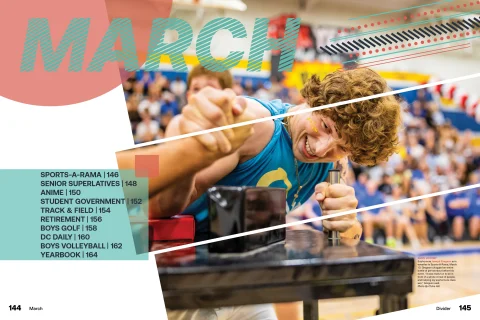
In what ways have you used color, type and other graphic elements like line, shape and texture to complement your verbal? All these elements should be used to create a defined personality and vibe that are a part of your theme that can be easily incorporated into the guts of the book.
Check #2: Mods
Have you included theme-based mods on most spreads? Start with the words of your verbal and create a repeating mod that relates to them.
The theme of the 2026 Chieftain from Jupiter Community High School was “In a Moment,” and their goal was to show the importance of focused individual moments and how they affected the story of the year. On many spreads they included a mod called “[Student’s Name] Moment.” For example, on the cross country spread, they included a mod called “Katie’s Moment,” which told the story of senior Kate Hanssen and how she celebrate her four years on the team on senior night.
Check #3: Headlines
Have your incorporated theme-based headlines as another subtle way to connect your reader to your theme?
As you write your headlines, consider including theme-related word play that directly or more subtly ties to your theme. For example, the 2026 theme of the McKinney High School yearbook, The Lion, was “Make Room for Us.” In the spread on how Student Council president Danielle Howard added all her friend’s thumb prints as a part of her senior parking space design, they used the headline, “Making My Final Mark.”
The theme of the 2026 Raider from Gulliver Prep Upper School was “Here for It” celebrating the first 100 years of the school. On their first day of school spread emphasizing the use of icebreakers, they used the headline “Here We Go (again)” and subhead “Icebreaker activities help build class dynamics” that directly referenced their theme.
Check #4: Photography
Does your photography connect some aspect of your theme verbal? Challenge your photographers to capture action and reaction that specifically illustrates your theme.
One of the goals of the photos on your title page and in your opening spreads should be to have visual representations of your theme words there, but don’t stop there. Look for ways to capture your theme concept visually with your photos specifically.
Bonus Check: Overlooked areas
Don’t forget that your theme is more than just your verbal – it’s also the visual connections you have set up on your cover. The use of type, color, line, shape and texture need to be emphasized in all sections of the book.
Also keep in mind the areas you may have overlooked. Where should your theme be that you may have overlooked? The portrait section, ads and especially the index which is a great place to emphasize your theme look with color, type and theme-based mods one more time before the closing.
Using these theme checks, you’ll be on your way to an incredible yearbook that effectively tells the story of your year.