Walsworth’s 2026 Photo Contest is now open through March 27, which makes this the perfect time to revisit one essential topic: photojournalism ethics.
Every yearbook adviser wants award-worthy photography. But more importantly, they want a book that reflects reality and earns trust from their school community. Strong composition and dramatic lighting may catch attention, but credibility is what gives images lasting value.
When Editing Crosses the Line
Most ethical issues in yearbook photography do not begin with intentional dishonesty. They start with small decisions:
- Cropping out a reaction that changes the story
- Removing a distracting object in the background
- Over-saturating a winter sports image to make it “pop”
- Using AI tools to clean up or extend a scene
Individually, these edits can feel harmless. Collectively, they can alter context, distort reality and damage trust.
Scholastic press associations like JEA, NSPA and CSPA share clear expectations for student journalists:
- Journalism photos must tell the truth.
- Do not add, remove, move or fabricate elements.
- Cropping must not distort meaning or context.
- Technical corrections are acceptable if they reflect what the eye saw.
- AI cannot be used to generate or alter visual content in journalistic images.
These standards are not meant to limit creativity. They exist to protect credibility.
Access the Photo Ethics Lesson Plan
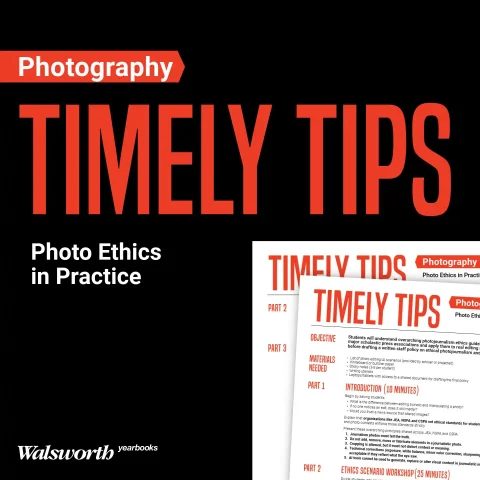
The Timely Tips lesson plan, Photo Ethics in Practice, gives advisers a structured way to teach these standards in a single class period.
Students will:
- Learn the overarching photojournalism guidelines from major scholastic press associations
- Evaluate realistic editing and AI scenarios
- Draft a written staff policy for ethical photo editing
Instead of guessing where the line is, staffs define it together. That shared understanding becomes especially important during contest season, when judges hold submissions to the highest ethical standards.
From Discussion to Staff Policy
One of the most powerful parts of this lesson is the final step: creating a written staff photojournalism ethics policy.
When students collaborate to define what is allowed, what is prohibited and how AI tools should be handled, ethics shift from being an adviser-imposed rule to a shared professional commitment.
After teaching this lesson, advisers often notice:
- More thoughtful editing decisions
- Fewer last-minute ethical debates before deadlines
- Greater awareness of context in cropping
- Stronger alignment between classroom standards and contest expectations
Most importantly, students begin to see themselves as journalists responsible for preserving truth.
As the Photo Contest continues through March 27, now is the time to ensure your staff’s strongest images also meet the highest ethical standards.
Download the Photo Ethics in Practice lesson plan and put it into action with your staff.
If you would like support reviewing contest selections or strengthening your staff’s photo policies, your local Walsworth Yearbooks representative is ready to help.