Student photographers play key roles in any successful yearbook program, but after they learn the basics of photography, they often find themselves with less structured work than your writers or designers. If you need photography classroom ideas to prevent boredom and help photographers continue to build their skills year-round, try these easy activities.
Build a Strong Foundation
While your writers and designers do more conceptual and planning work during the first months, your photographers need to get right to work on the first day, if not sooner. Start by teaching the basics and setting up resources your photographers can use all year long.
- Name a photo editor. Choose a strong photographer who can act as a leader. This student should help teach new photographers, assign photo tasks and keep the team on track while you focus on other parts of the staff.
- Print step-by-step guides for camera settings, editing, file saving and shooting tips. Keep copies at their desks or post them on the wall. This gives staffers a point of reference before they immediately turn to you for a simple question.
- Use a hands-on teaching approach. Don’t just tell students how to shoot – show them. At the start of a new sports season, bring them to the gym or field and act out the event. Demonstrate where to stand, how to stay safe and what settings to use. Students remember information better when it is taught in an engaging, interactive way.
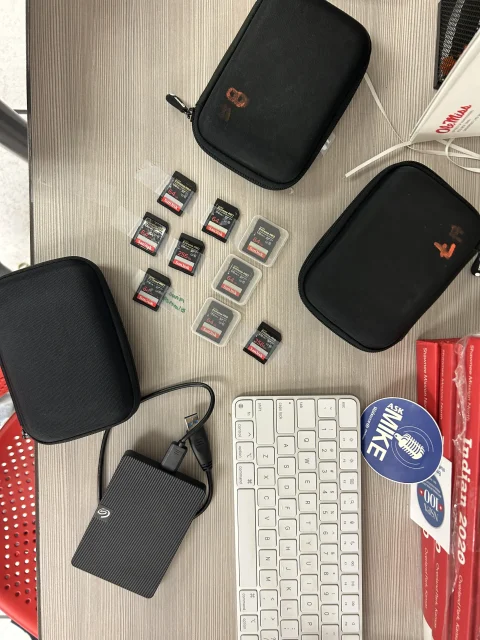
- Take ownership of the equipment. Make sure everyone knows your equipment organization system and how to take care of their cameras and lenses. This is a good reminder to staffers that using valuable equipment requires extra care.
Activities
Once the school year is underway, your attention often shifts to stories, design and deadlines. But when your photographers catch up on all their editing and finish all their shoots, what do they do next?
It’s pretty common for them to take classroom pictures – to wander around the school until they find something interesting happening. You might get a couple cool academic photos, but photographers become bored with busywork that kicks them out of the classroom. Don’t ignore this opportunity for your photographers to continue learning.
These activities keep your photographers self motivated, organized and curious, with the bonus of training them in skills that help you and the rest of the staff come crunch deadlines.
Organization and Calendar Making
At the beginning of a new month/deadline/semester, have each photographer print out calendars that span the new time period. Then, look for upcoming events, sports and class activities on your school’s calendar. Collaborate with editors to check what they need photos of and let your photographers work together to decide who will shoot what.
Planning this in advance allows each student to take accountability for what they take pictures of and help avoid schedule conflicts because the students make their own photography assignment schedules. Once done, the calendars become public information. Hang them on a wall or white board. This way everyone knows who is photographing what and can hold each other accountable.
Grading: At the end of the period, have your photographers reflect on their calendars. Did they make it to all their shoots? What was their favorite/least favorite assignment? What should they keep in mind when making their next calendar? Score them on the completion of the reflection or the success of making it to their shoots. This activity teaches organization, accountability and reflection.
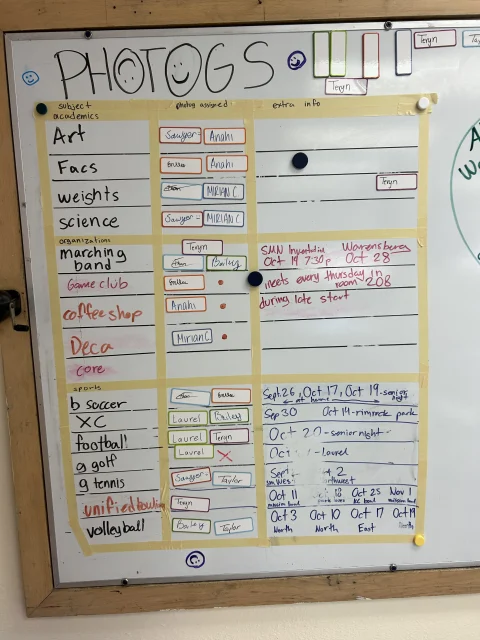
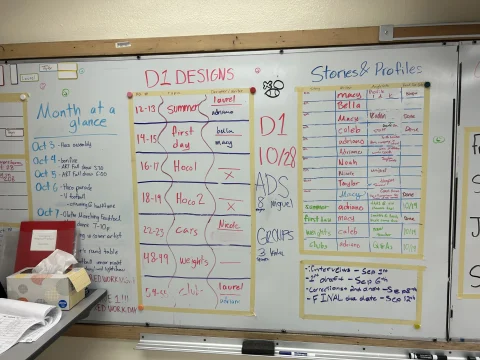
Writing on the walls. Organizing calendars, photography assignments and deadlines on the whiteboard helps staffers take accountability for what they are supposed to accomplish.
Caption Writing
Every yearbook staffer should know how to write captions. Even though photographers focus on visuals, learning to write captions creates stronger storytellers and journalists.Since photographers were at the event, they know what happened best, and can write the most accurate and detailed captions. While taking photos, encourage photographers to at least get the students’ names or a quote while the memory is fresh in everyone’s mind.
Explore these useful resources from Walsworth to learn about why captions are important and how to teach the A.B.C.D. caption writing method:
- A: Attention-grabbing first sentence
- B: Basic facts
- C: Context or background
- D: Direct quote
Activity: Every week, your photographers get information and write a full A.B.C.D. caption for the best photo they took that week. Even if you don’t use the photo in the book, it never hurts to have a stock pile of amazing photos with ready-to-go captions.
You can also use these photos for a “photo of the week” post to your social media. This gets photographers excited to have their work showcased and hold them accountable to get good photos and captions.
Learn Through Play
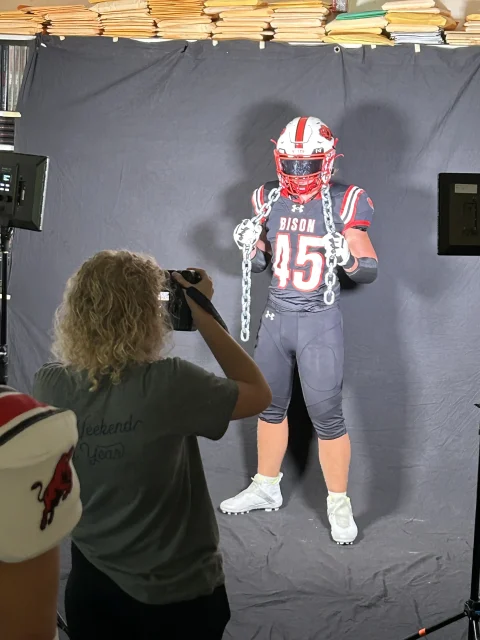
The best skill any journalist can possess is curiosity. Letting photographers experiment builds skill and confidence. Allow them to try portrait work, product photography or test out special equipment like flashes, lenses or backdrops.
These self-guided projects help them understand how to control light, angles and subject placement. This allows students to take ownership of their learning and build a culture of peer learning among your photo staff.
Outcome: Allowing your photographers to experiment not only builds their confidence in an individual, but it allows certain photographers to “own” their skills. Those new skills translate to things like marketing and helping designers bring a creative vision to life. Product photography is useful for clever mods, videography skills help promote events or sell your book and portrait photography will complement your profiles.
Assign Research Projects
Most students will only learn surface-level photo skills unless encouraged to go deeper. Research projects can fill in the gaps. Ask students to pick a topic related to photography. This could include:
- A Photoshop topic and how it could be used in the yearbook.
- A famous photojournalist who had a major impact on history.
- What does a professional sports photographer do?
Project: Teaching is a great way to demonstrate knowledge. This is a great project for slow periods like after submitting your yearbook or as a final. Allow photographers to spend a few days researching and preparing a short slideshow or video presentation. Grade on the breadth of their research and participation in presenting. This also helps them develop public speaking and researching skills.
Keep Going!
When your photographers are supported with structure, ownership and creative opportunities, they don’t just stay busy, they grow into stronger, more confident visual storytellers. These activities keep photographers curious and challenged long after you cover the basics. Instead of saying “I’m bored,” your photographers will say, “What’s next?”