

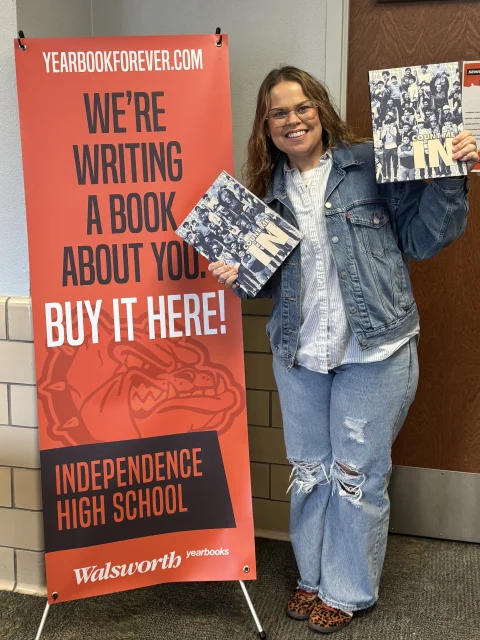
Nearly 530 students attend the high school where I teach. In a perfect world, our yearbook would likewise have 530 pages – enough real estate to adequately cover each unique student, their talents, interests and accomplishments – but the reality is that we have only 152 pages to work with. While our page count is modest, this limitation has become a catalyst for innovation. By adopting a unique chronological approach, we’ve learned to maximize each spread without sacrificing the journalistic standards that define our century-old publication. This shift hasn’t just solved a space problem; it has fundamentally elevated our staff’s performance and the student body’s perception of the book.
Strategic Sequencing
When I attended my first Adviser Academy five years ago, I learned that several schools were considering the benefits of chronological coverage. As a first-year adviser, I saw this as an opportunity to make a notable change to the program I was inheriting, and logistically, I knew this switch might very well be an answer to the question keeping me awake at night: “Where am I going to put everything?” After drafting our first ladder, I quickly realized that half of our pages were dedicated to portraits, senior tributes, advertisements and indexing. Necessary content, but not necessarily our most creative work. This meant the other half of the book truly needed to pack a punch.
Choosing a Method
We initially considered a hybrid approach, dedicating spreads to individual teams or events before organizing them chronologically. In the end, however, this move made little sense for us as it simply meant trading one ladder for another. To address our real estate problem, we needed a more strategic solution. As it stands, the first 59 pages of our 152-page yearbook chronicle the school year, August to May, and the dividers are seasonal: summer, fall, winter and spring. What further elevates this strategy is the varied content on any given spread. We often cover multiple teams, academics and student life, all on the same spread. My small staff of ten appreciates this strategy and structure because assignments often feel less burdensome than the alternative. Rather than covering the football team’s entire season, for example, a staffer knows they need to get one fantastic football photograph in early September. Someone else will take care of late September, early October and so on.
Themed Coverage
We dedicate a minimum of two spreads to each month and typically assign two staff members to collaborate on each chronological spread. This means two people are responsible for approximately two weeks of intense coverage. They attend every event they can in those two weeks, conduct the necessary interviews and take photos (or ensure someone else is taking photos) at the many events listed on the calendar. Of course, the work doesn’t end after their two weeks of coverage are up, but the pressure does somewhat lift. Another benefit of chronological coverage is that more eyes will land on each spread, and we know that increased views mean increased interest and, ultimately, increased sales. A reader who might otherwise flip right past a spread predominantly featuring the floriculture team and their annual plant sale, for example, might linger longer once they realize the early April coverage includes both success in the greenhouse and success on the greens: “Varsity Golfers Conquer Greens of their Own.”
Similarly, a reader who has little interest in dissections that took place in an anatomy and physiology class might land on the spread anyway because the mod featuring prom trends – “Head-to-Toe Ensembles Dissected” – caught their eye. Chronological coverage, for us, has meant more diverse and balanced coverage, and it has encouraged greater creativity in the yearbook workroom. The challenge is finding a common thread – something that links the many occasions in a given month or handful of weeks – and working to make the connection obvious for readers. But it’s this same challenge that keeps staffers engaged and entertained. We have some of our best laughs and lightbulb moments when working to connect the varied coverage on our chronological spreads, and our book is ultimately better for it.
Putting it into Practice
Committing to chronological coverage is more than simply committing to an organizational structure. Our approach becomes an extension of our theme, a design element rather than simple sequencing. To account for the limited space we have to work with, each spread in the chronological portion of our book consists of relatively short copy (typically two to three loosely related events), photos relevant to the copy (though there are rarely more than two photographs from the same day or event) and, if space allows, at least one mod or secondary coverage element. Our headlines function as a thematic umbrella for the spread, and we focus our attention and creativity on writing leads and transitions that help those headlines make sense. Comprehensive storytelling has its place: the volleyball team’s journey to the state tournament, three months with a long-term substitute in a notably tough AP class and a student’s hard work and dedication refurbishing his dad’s old sports car are all stories worth telling. We make sure to leave room for long-form stories just like these. Our commitment to accuracy and objectivity, however, is tested when it comes to comprehensive copy. Long-form copy carries more risk: more dates, more interviews, more opportunities for inaccuracy and a stronger pull toward editorializing. But because chronological coverage handles the month-to-month work spatially and efficiently, staff members have more time and energy to revise and refine those longer pieces when (and where) they matter most.
An Unexpected Benefit
No yearbook, no matter its size, will ever tell every student’s story, but strategic sequencing can ensure that every month is captured and that more students are photographed and quoted in a small but mighty book. In our experience, chronological coverage solves logistical problems and enhances creativity. This approach simultaneously sharpens journalistic habits, helps with workload distribution and cultivates a culture dedicated to unique coverage, but perhaps the most noteworthy benefit of this structure is that it subtly emphasizes the importance of theme, both on a single spread and throughout the yearbook. We build every chronological spread around a common thread. Staff members learn to wield this connection as they plan and design a single spread. They are consequently better able to understand the necessity of an emotional throughline that makes the entire year and publication feel cohesive.
In the end, the limitations that once kept me up at night have become my team’s greatest creative advantage, and our unique approach to chronological coverage has been the most effective decision I’ve made as an adviser.
If you love yearbook, then you’ll love the full issue of Idea File magazine, available at walsworthyearbooks.com/ideafile. And if you’re interested in finding out more ways Walsworth can help you create a smoother, easier yearbook experience, reach out to your local Walsworth rep.

![[03]26_SMG_Yearbook Suite Writing_FB1](https://cdn1.walsworthyearbooks.com/wyb/sites/2/2026/09/21080327/0326_SMG_Yearbook-Suite-Writing_FB1-480x480.webp)