The fall semester can move quickly in your classroom. As students settle into their roles and production gathers momentum, you may begin noticing which skills need reinforcement.
Some staffs need more practice collaborating. Others are ready to strengthen photography, design or writing. Walsworth’s September collection of Timely Tips offers four free, classroom-ready lesson plans you can use when those needs arise. Use the lessons together as a foundational training series, revisit them when students need extra practice or save individual activities for later in the year.
Help students understand their strengths
Strong yearbook programs need more than a list of assignments. Students benefit from understanding how their individual strengths contribute to the publication and how to work with classmates whose approaches may differ from their own.
The Discover Your Yearbook Staff Personality lesson uses the Yearbook Personality Quiz to support conversations about staff strengths, roles and collaboration.
Turn snapshots into storytelling photos
Students often begin taking yearbook photos before they fully understand how composition affects what readers notice. Learning a few foundational techniques can help photographers make more intentional choices and create images that communicate more than a standard snapshot.
The Using Photo Composition to Create Stronger Yearbook Photos lesson introduces rule of thirds, fill the frame and leading lines through an accessible photo challenge. Students can use DSLR cameras, smartphones or a combination of both to practice composing more interesting, storytelling-focused images.
Bring the pieces of a spread together
Knowing the individual parts of a yearbook spread does not always mean students understand how those elements work together. Designers must consider how photography, writing, captions, typography, color and spacing guide readers through the story.
The Yearbook Storytelling and Design Practice lesson gives students an opportunity to combine those skills by creating a two-page “About Me” spread. Using familiar personal content allows students to concentrate on selecting purposeful photos, establishing visual hierarchy and organizing the page into a cohesive design.
Look beyond the obvious story
Recurring events belong in the yearbook, but the stories about them do not need to sound the same every year. Writers must learn to look past basic summaries and identify the people, moments and experiences readers may not already know.
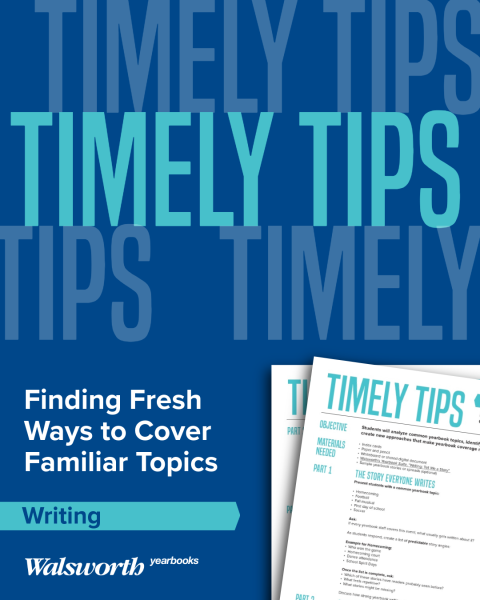
The Finding Fresh Ways to Cover Familiar Topics lesson challenges students to rethink predictable coverage and develop stronger, people-centered feature story angles. Peer feedback helps students evaluate and refine their ideas before they begin reporting.
Keep your yearbook plans on track
Teaching is only one part of managing a yearbook program. You are also balancing staff training, sales, deadlines, page assignments, photography and communication throughout the production cycle.
The Adviser Timeline Checklists can help you review completed work, identify unfinished tasks and consider what needs attention next. Separate versions for spring-delivery and summer/fall-delivery schools provide planning support based on your program’s production schedule.
Put these lessons to work with your staff
Strong yearbook skills develop through practice, reflection and the right support. Download Walsworth’s September Timely Tips collection to give your students classroom-ready practice in teamwork, photography, design and writing.
If you are looking for a yearbook partner who supports both classroom instruction and book production, contact Walsworth Yearbooks to learn how our curriculum, training and yearbook expertise can support your program.