Most students read a narrative and think about what it says, not what it requires. This week’s Timely Tips slows down the process and forces your staff to look under the hood of great copy. Good stories don’t just appear; they come from access, observation and conversations that build trust. They come from reporters who ask better questions, pay attention and verify everything before they write a single line.
This lesson pushes your staff to analyze how a story exists in the first place, not just how it sounds on the page.
Start with what students think they know
Before diving into the text, ask the class what they believe happens behind the scenes of a well-written feature. Most will guess: interviews, research, maybe shadowing someone for a day. Good. Now take them further. Help them understand that reporters must earn spaces like locker rooms, bus rides or sideline huddles. They need relationships that make sources comfortable sharing emotional, vulnerable moments. They need discipline to confirm facts and follow up when something feels incomplete.
Pair this with the Yearbook Chat with Jim episode featuring former adviser, Susan Massy. Ask students to listen for:
• How reporters gather quotes and details
• Why trust makes people open up
• What separates a complete, credible story from a hollow one
Break down the opening paragraph
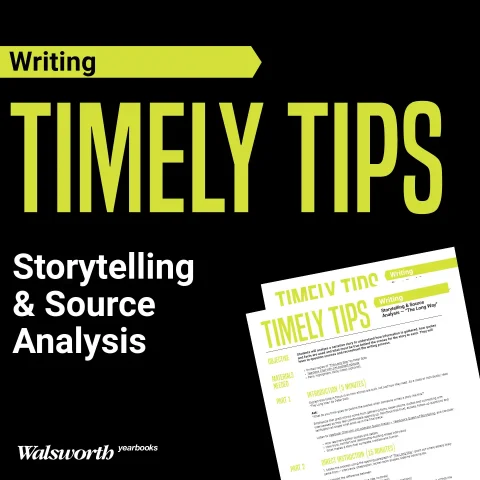
Model the process using this Timely Tips lesson. Have students mark every detail, then consider where it came from.
This is where students start realizing how intentional strong reporting has to be. Nothing in a good story is random. If a detail appears, a reporter earned it.
Reconstruct the reporting
Choose one sentence or detail from the story and challenge students to reverse engineer it. They should work as if they are building a timeline of how that information entered the reporter’s notebook.
The goal is to teach students to think like journalists, not just write like them.
Show them the payoff
Strong reporting is the backbone of yearbook storytelling. When a writer commits to good habits, scenes feel vivid, quotes feel honest and stories feel human. When they cut corners, readers can tell.
If your staff needs more real-world examples, check out the storytelling advice in Walsworth’s Class Starters, That Yearbook Podcast or the training video library.
Great stories don’t just capture what happened. They capture what it felt like. That only happens when students understand how information enters a story and take responsibility for gathering it with care.
Trust + Accuracy + Curiosity + Careful Reporting = A Great Story
Ready to dig in?
This Timely Tips lesson gives your staff a clearer understanding of how real stories are built. Put the strategies into action by walking through the exercises, then push students to write a lead that reflects what they uncovered about the reporting behind the narrative. It’s the quickest way to see whether they truly understand how a story comes to life. Happy writing!