
Copywriting
How student leaders can take charge of yearbook proofing with a five-phase system.
Learn how yearbook editors can lead a five-phase proofing system to catch errors, reduce stress and improve accuracy before deadlines.

Learn how yearbook editors can lead a five-phase proofing system to catch errors, reduce stress and improve accuracy before deadlines.
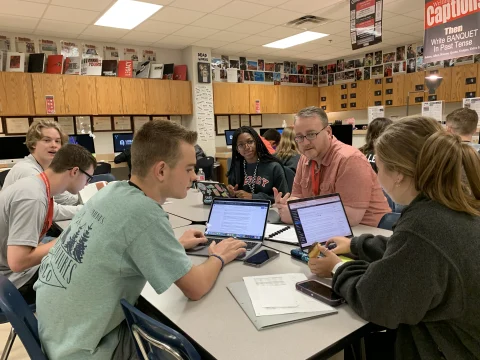

During editing, writers should remove vague wording, weak verbs and unnecessary filler. Replace passive voice with active verbs that create movement and energy. Consider these two examples: “The class was taught by Mr. Bennett.” Now compare it to: “Mr. Bennett paced between welding stations while students adjusted their helmets and revised their measurements.” The second sentence creates action and imagery.
![[03]26_SMG_Yearbook Suite Writing_FB1](https://cdn1.walsworthyearbooks.com/wyb/sites/2/2026/09/21080327/0326_SMG_Yearbook-Suite-Writing_FB1-480x480.webp)
Every adviser has seen it happen. A student opens a blank document, types a broad sentence about a team working hard or students having fun and then waits for the rest of the story to appear. The result is a generic or incomplete story. The problem may not be the student’s writing. The problem may be everything that should have
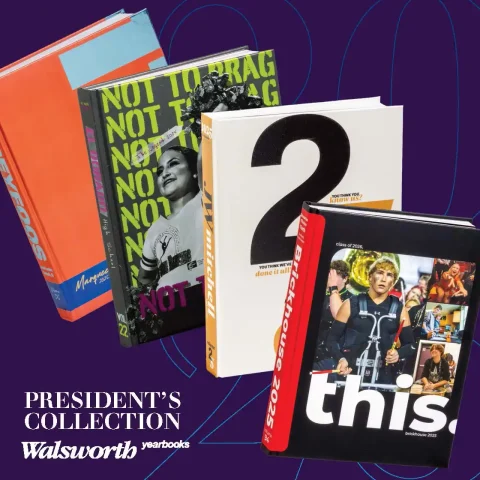
Yearbook photography captures a moment. Writing explains why the moment mattered. The 2025 President’s Collection Training Series highlights award-winning books that treat writing as essential coverage, not decoration. These staffs interview with purpose, structure stories intentionally and let student voices lead the narrative. Award-Winning Writing Examples from the 2025 President’s Collection The Marquee, Dreyfoos School of the Arts, West Palm
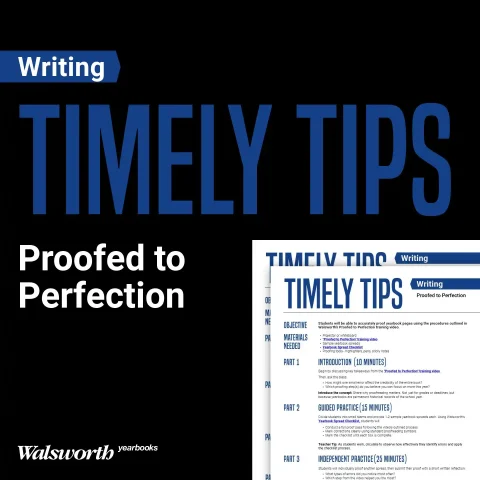

Accuracy matters in every yearbook, and even the most beautiful designs can fall flat if they’re filled with typos, mislabeled photos or formatting mistakes. Proofing isn’t just a final step; it’s a vital part of producing a book your school can be proud of for years to come. That’s why this week’s Timely Tips lesson plan, Proofed to Perfection, gives
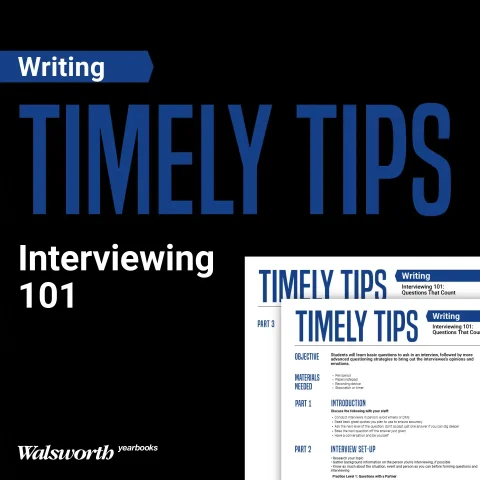
Strong interviews are the secret ingredient behind standout yearbook stories. They provide the quotes, details and emotion that turn a spread from ordinary to memorable. This week’s Timely Tips shows your staff how to move past surface-level questions and into conversations that actually capture the heart of the story. Start simple, then build Every interview has to begin somewhere, and
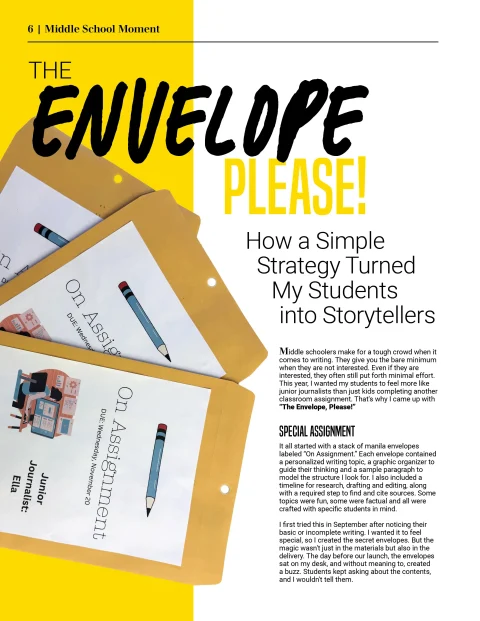
Middle schoolers make for a tough crowd when it comes to writing. They give you the bare minimum when they are not interested. Even if they are interested, they often still put forth minimal effort. This year, I wanted my students to feel more like junior journalists than just kids completing another classroom assignment. That’s why I came up with


The best yearbooks combine words, pictures and modern design. Mods allow you to do all that in a small space. Mods are a standard addition to traditional copy and photos on most spreads. But they’re not decoration; they’re storytelling devices in miniature form. You might know them as sidebars or alts (short for alternative story forms). The name comes from

There’s no question on the planet that better captures what it means to be curious than “why?” Why does the camera refuse to focus? Why does the volleyball team perform a chant before every game? Why do the drummers wear funny hats during a concert? Why does my teacher have a life-size cutout of Steve Irwin in the corner of
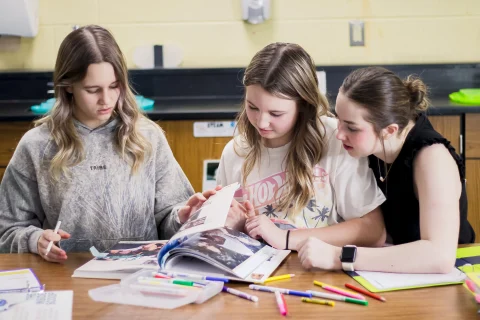

AP Style isn’t everyone’s favorite way to write, and if you’ve ever flipped through the stylebook, you know it contains a few controversial guidelines. I went from writing in MLA to AP Style journalism writing at Mizzou. Being told to not use Oxford commas anymore was quite the adjustment, but thankfully I had a high school journalism teacher who introduced