As final deadlines approach, yearbook staffs are in one of the most critical stages of production – and having strong yearbook proofing strategies in place can make all the difference.
Spreads are nearly complete. Coverage decisions are made. The book is coming together. But at this point, it’s often the smallest details that can have the biggest impact.
A misspelled name, a missing caption detail or a subtle alignment issue might seem minor in the moment – but once the book is submitted, those mistakes become permanent. And during deadline season, those errors are often the result of rushed or unfocused proofing.
That’s why now is the perfect time to shift from simply checking pages to using smarter, more intentional yearbook proofing strategies.
Go beyond a single read-through
One of the biggest misconceptions about proofing is that it’s a one-step process. In reality, reading through a spread once – even carefully – is rarely enough to catch everything.
Students tend to miss errors because they are too familiar with their own work. Their brains fill in gaps, skip over mistakes and focus on what they expect to see instead of what’s actually there.
The solution isn’t just to proof more; it’s to use a variety of yearbook proofing strategies that help students approach their work from new angles.
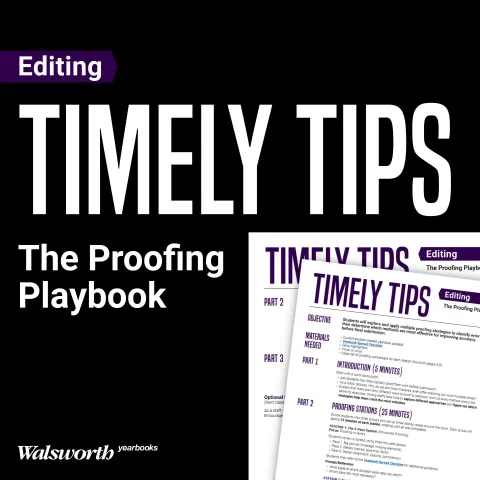
This week’s Timely Tips lesson, The Proofing Playbook, introduces students to multiple strategies they can use to catch more errors before submission.
Explore strategies that actually work
In this lesson, students rotate through proofing stations, each focused on a different technique used by real editorial teams.
They’ll practice:
- Structured proofing with a 3-pass system that separates big picture, details and design
- Unconventional proofing methods like reading text backwards or out loud to slow down their thinking
- Fresh-eyes review, where they proof someone else’s work to eliminate familiarity bias
These yearbook proofing strategies help students focus on different aspects of the spread, making it easier to identify errors that might otherwise go unnoticed.
Just as important, students begin to recognize which approaches work best for them – and when to use each one.
Build stronger habits before submission
This lesson isn’t just about catching last-minute mistakes. It’s about helping students develop a more intentional and effective proofing process they can rely on under deadline pressure.
By the end of the activity, students will:
- Understand how different yearbook proofing strategies impact what they catch
- Feel more confident in their ability to review pages thoroughly
- Have practical methods they can immediately apply to remaining spreads
Even for staffs that have already submitted their book, this lesson provides a valuable opportunity to reflect on what worked and improve their workflow for future publications.
Make proofing part of your process
Strong yearbook staffs don’t leave proofing to chance… they build it into their workflow.
As your team prepares for final deadlines, encouraging students to use a range of yearbook proofing strategies can lead to:
- Fewer last-minute corrections
- More efficient use of class time
- A more polished, professional final product
Bring it into your classroom
👉 Download The Proofing Playbook lesson plan and worksheets to use with your staff this week.
For a refresher on foundational proofing skills, revisit our Wait Before You Submit That Yearbook Spread lesson and Yearbook Spread Checklist for a step-by-step look at what to check before submission.
Looking for more support as you wrap up this year or start planning for next? Walsworth offers hands-on guidance, classroom resources and personalized support to help your program succeed – from first deadline to final delivery.
Connect with your Walsworth Yearbooks Sales Representative today to see how we can support your staff this year and beyond.