By May, most yearbook staffs are running on two tracks at once.
On one track, they are finishing the current book – chasing last deadlines, checking details and trying to wrap the year strong. On the other, they are already thinking ahead. Next year’s staff. Next year’s plan. Next year’s “what we’ll do better.”
The challenge is that those future‑focused conversations often stay vague. Students know something felt rushed. They know coverage was missed. They know certain sections didn’t turn out the way they hoped. But without time and structure, those thoughts rarely turn into clear goals.
That is where intentional reflection matters.
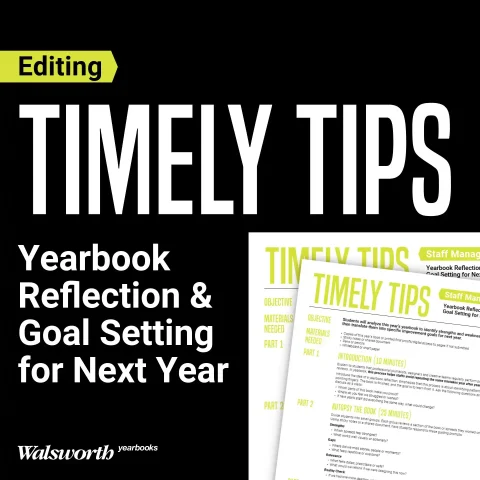
As we round out the 2026 school year, our newest Timely Tips lesson, Yearbook Reflection & Goal Setting for Next Year, is designed to help advisers slow things down just enough to make reflection useful, not uncomfortable or overwhelming.
Why reflection matters at the end of the year
Many advisers build in reflection during summer workshops or early fall training. Fewer take advantage of the moment right now, when the book is finished or nearly finished and the experience is still fresh.
End‑of‑year reflection works because:
- Students can see the entire book, not just individual spreads
- Strengths and gaps are visible side by side
- Patterns are easier to identify than isolated mistakes
- Students are more honest once the pressure of deadlines is gone
This lesson is not about assigning blame or rehashing frustrations. It is about helping students step back, look at the finished product and ask better questions about how their program operates.
What makes this lesson different
Yearbook Reflection & Goal Setting for Next Year is built as a one‑class‑period activity that feels productive, not heavy. It guides students through a structured review of the book and then moves them quickly toward action.
Instead of asking, “What went wrong?” students are prompted to ask:
- Where does the book feel strongest and why?
- Where does coverage feel thin, repetitive or outdated?
- What would we improve if we had one more deadline?
- What patterns do we see across sections?
Because the focus is on patterns, not people, the conversation stays constructive. Students learn to talk about the work itself, a critical skill for any collaborative creative team.
Turning observations into real goals
Reflection only matters if it leads somewhere.
The final portion of the lesson challenges students to turn what they noticed into specific, realistic goals for next year’s book. Not wish‑list goals. Not “be better” goals. But goals connected directly to what they observed.
For example:
- Improving representation by adjusting coverage planning
- Adding more student voice where spreads feel repetitive
- Strengthening workflow to avoid rushed sections late in the year
As a staff, students then prioritize those goals and document them so they can be revisited during summer planning or fall staff training.
This step is key. It helps advisers carry student voice forward instead of starting over each year with a clean slate and the same challenges.
Why this lesson fits perfectly in May
May is a natural reflection window, but it is often underused. Advisers are busy. Students are tired. It can feel easier to push reflection off until later.
This Timely Tips lesson is designed to work within that reality. It:
- Fits into a single class period
- Requires minimal prep
- Works for middle school or high school staffs
- Can stand alone or pair with summer planning lessons
Most importantly, it gives the year a sense of closure. Students leave knowing their work mattered and that their ideas will shape what comes next.
A stronger finish sets up a stronger start
Advisers often talk about wanting students to take ownership of the yearbook. Reflection is one of the most effective ways to do that.
Helping students reflect on this year’s book is powerful. Helping them turn those reflections into a better experience next year is even more impactful.
That’s exactly what Yearbook Reflection & Goal Setting for Next Year is designed to do – and for many advisers, it also sparks a bigger question:
What would next year look like with stronger support, clearer planning and a yearbook partner who helps you think ahead?
A stronger yearbook doesn’t happen by accident. It starts with reflection, and it grows with the right support. If you’re ready for a smoother process, stronger curriculum and more guidance for you and your staff, now is the perfect time to see what’s possible with Walsworth.